
Miller’s Descent from Master Hunter to Destroyer
Butcher's CrossingThis thread follows Miller’s confidence in his remembered valley into an all-consuming hunt, a winter of stubborn survival, and the final destruction of the hides he can no longer sell.
increasing Bearing strength in each event
 decreasing
Bearing strength in each eventdecreasingThe Valley Held in Memory
The Valley Held in Memory
A place apart
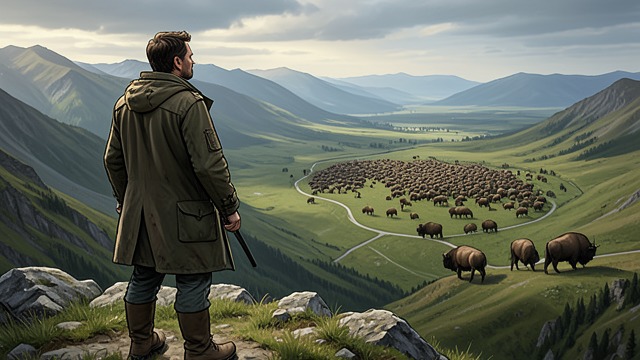
Miller recalls finding a secluded mountain valley while trapping in Colorado. A worn bison trail led him to a grassy basin where thousands of animals grazed, seemingly beyond the reach of the commercial hunters working the plains.
Discovery becomes a promise
He remembers the valley as a rare place whose existence and location he alone can protect. For years, changing work, money, and the absence of a suitable crew prevent him from returning, but the remembered herd remains a possibility he intends to realize.
The discovery becomes more than useful knowledge. It supplies Miller with an image of mastery over country and circumstance, an image that will harden when the land no longer matches his recollection.
Recruiting a Reluctant Crew
Recruiting a Reluctant Crew
A private scheme made public
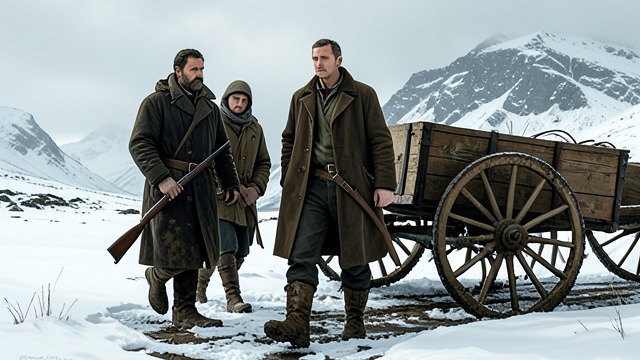
Miller persuades Andrews to fund the expedition and later brings Schneider into it as a paid skinner. He also draws Charley Hoge back into the work, despite Hoge’s refusal and memories of injury in the mountains.
Authority as reassurance
Miller presents the journey as manageable: he has chosen a route, arranged the wagon, and expects to reach the valley in time for the hides. His calm certainty holds the crew together even as Schneider questions the age of Miller’s information and the danger of the trip.
This leadership is both practical and coercive. Miller knows the work, but he also expects others to accept his judgment, a pattern that becomes increasingly dangerous once his remembered route fails him.
The Hunt Takes Command
The Hunt Takes Command
A killing method
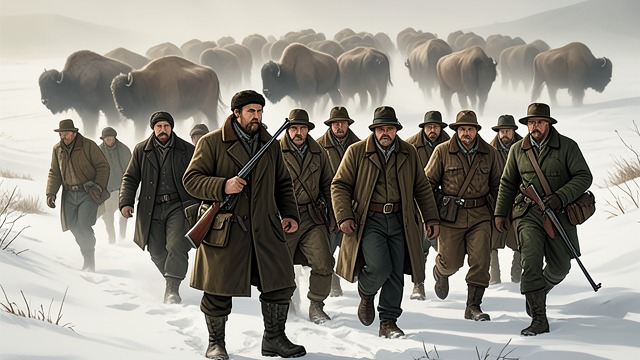
Miller uses a Sharps rifle to bring down bison in controlled succession, disrupting the herd’s leadership so that animals circle rather than flee. The method works with terrible efficiency, allowing him to kill far more animals than the crew can skin promptly.
Purpose turns into compulsion
Schneider warns that the carcasses will become difficult to process, but Miller insists that every animal he kills will be skinned. As the hunt continues, Andrews sees Miller’s effort as less a calculation for profit than a mechanical, increasingly isolated response to the living herd.
Miller’s expertise does not restrain the slaughter; it enables it. His wish to complete the hunt becomes a command that overrides ordinary limits of labor, season, and shared judgment.
Refusing to Leave the Valley
Refusing to Leave the Valley
The season closes in
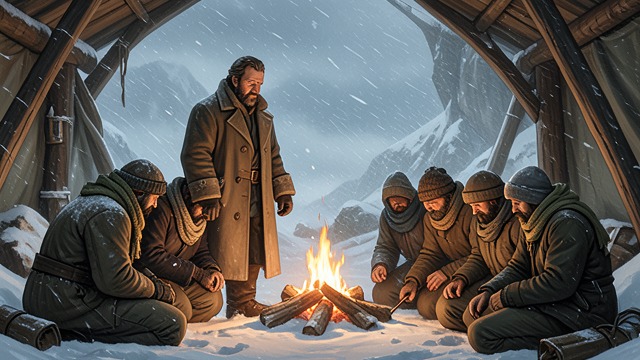
As snow begins to fall, Miller continues the hunt and delays departure. A blizzard blocks the pass, destroys the crew’s immediate route out, and traps the men among the hides and the remains of the herd.
Survival replaces the hunt
Miller now directs the construction of a shelter and organizes food, firewood, and care for the animals. His knowledge remains essential: he recognizes that the party must wait for the pass to clear and works through the winter to keep the group alive.
The same force that had prolonged the hunt now binds Miller to its consequences. Even after the bison disappear and the original objective is lost, he remains tied to the valley and the hides left behind.
Burning the Failed Fortune
Burning the Failed Fortune
The lost value of the hunt
When Miller returns to Butcher’s Crossing, J.D. McDonald tells him that the hide market has collapsed. The thousands of hides Miller left in the valley have little value, and the wagonload brought back from the winter has already been lost in the spring river disaster.
Destruction as a last assertion
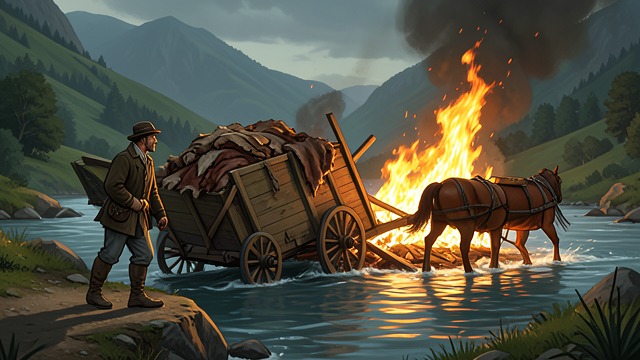
Later, Miller sets fire to McDonald’s remaining hide stock and uses a horse and wagon to push the hides into the blaze. He risks himself and the animal in a furious act that cannot recover his earnings or repair the broken agreement.
The fire makes Miller’s defeat visible, but it is also his final assertion of agency over the failed enterprise. Afterward he rides away into darkness, leaving Andrews and the ruined town behind without an explanation or reconciliation.
Years before the expedition, when Miller discovers the hidden Colorado valley
Early in the story, while Miller assembles the expedition at Butcher’s Crossing
From the first kill through the escalation of the autumn hunt
From the onset of the first snow through the winter confinement
Near the ending, after Miller learns the hide market has collapsed
